Why Page Speed Matters for Your Website
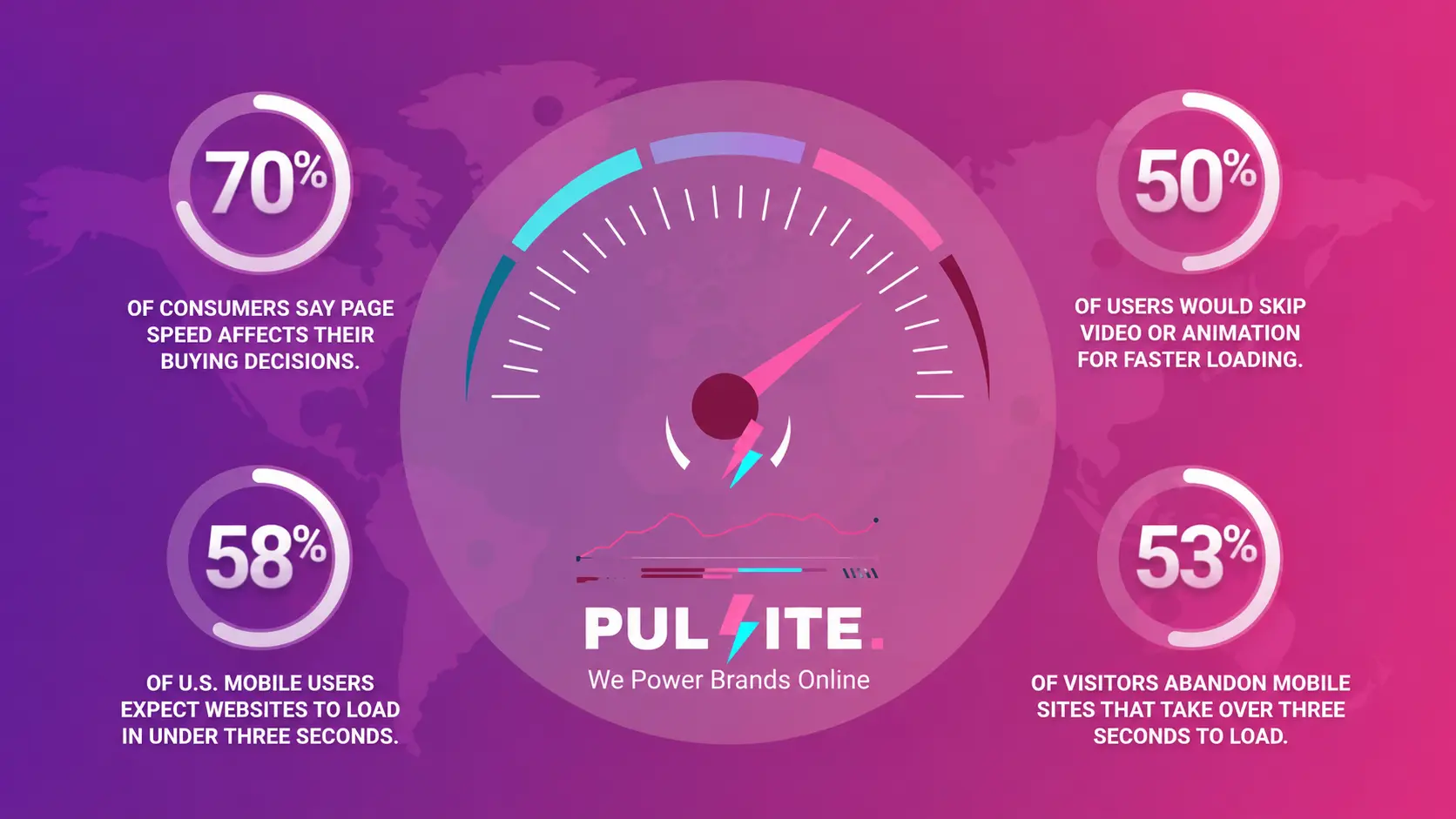
In the digital world, first impressions happen in milliseconds. As technology advances, user patience shrinks. If your website takes more than a few seconds to load, you’re not just losing visitors, you’re losing revenue.
This guide explores why page speed is the ultimate differentiator for modern websites and how it impacts your bottom line.
In a Nutshell…
- User experience suffers drastically with every additional second of load time.
- Google ranking directly penalizes slow sites and rewards fast ones.
- Conversion rates drop by up to 20% for every second of delay.
- Mobile users are the most sensitive to slow loading speeds.
- Optimization is an investment that pays for itself through better business results.
1. The Need for Speed: User Expectations
Modern internet users expect instant gratification. A decade ago, a 5-second load time was acceptable. Today, it’s a death sentence for your bounce rate.
According to research by Google:
- As page load time goes from 1s to 3s, the probability of bounce increases by 32%.
- As page load time goes from 1s to 5s, the probability of bounce increases by 90%.
- As page load time goes from 1s to 10s, the probability of bounce increases by 123%.
Your visitors aren’t just comparing you to your direct competitors; they are comparing their experience on your site to the frictionless experiences provided by tech giants like Netflix, Amazon, and Instagram.
2. SEO Impact: Google Loves Fast Sites
Since 2010, Google has used site speed as a ranking factor for desktop searches, and since 2018, for mobile searches. In 2021, they introduced Core Web Vitals, making speed and user experience even more critical.
Google’s goal is to provide users with the best possible results. A site with great content but terrible load speed provides a bad user experience. Therefore, Google is less likely to rank it on the first page.
Fast sites get:
- Better crawl rates (Google can index more pages)
- Higher rankings in search results
- More organic traffic
3. Conversion Rates: Speed is Money
Page speed directly correlates with your conversion rates (the percentage of visitors who take a desired action, like buying a product or filling out a contact form).
A study by SiteBuilderReport found that a site that loads in 1 second has a conversion rate 3x higher than a site that loads in 5 seconds.
| Load Time | Impact on Conversions | Impact on Revenue (Est.) |
|---|---|---|
| 1 Second | Optimal | 100% Potential |
| 2 Seconds | Slight Drop | ~90% Potential |
| 3 Seconds | Significant Drop | ~70% Potential |
| 4+ Seconds | Critical Drop | Under 50% Potential |
If you are running paid ads to a slow website, you are literally throwing money away. You pay for the click, but the user leaves before the page even loads.
4. Common Culprits of Slow Websites
Why are websites slow in the first place? Here are the most common issues:
- Unoptimized Images: High-resolution images that are larger than necessary.
- Bloated Code: Too much unnecessary Javascript and CSS.
- Poor Hosting: Cheap shared hosting plans that can’t handle traffic.
- Too Many Plugins: Especially common on WordPress sites.
- Lack of Caching: Not saving static versions of your site for returning visitors.
5. How to Measure and Improve
You can’t improve what you don’t measure. Here are the best tools to check your current speed:
- Google PageSpeed Insights: Gives you a score and specific recommendations.
- GTmetrix: Provides detailed waterfall charts of how your site loads.
- Pingdom: Great for testing speed from different geographic locations.
- Our free audit tool: A free custom tool that we developed using Google PageSpeed API. Check it out here
Quick Wins for Better Speed:
- Compress Images: Use modern formats like WebP.
- Minify Code: Remove spaces and comments from CSS and JS files.
- Use a CDN: Deliver content from servers closer to the user.
- Upgrade Hosting: Invest in a dedicated or cloud-based solution.
Conclusion
Page speed is no longer just a technical metric; it is a core business metric. It affects your visibility in search engines, your credibility with users, and ultimately, your profitability.
Investing in a fast, optimized website is one of the highest-ROI decisions you can make for your business.
Want to know how fast your current site is and how it can be improved? Contact us today for a free performance audit.